WhereSpoken 2.5: a clearer family tree – and a full one to explore

Every wrong guess in WhereSpoken already told you something: how closely the language you picked is related to the one you were listening to. Version 2.5 makes that answer easier to read, and for subscribers it opens up the entire tree behind it.
The ancestry tree finally looks like a tree
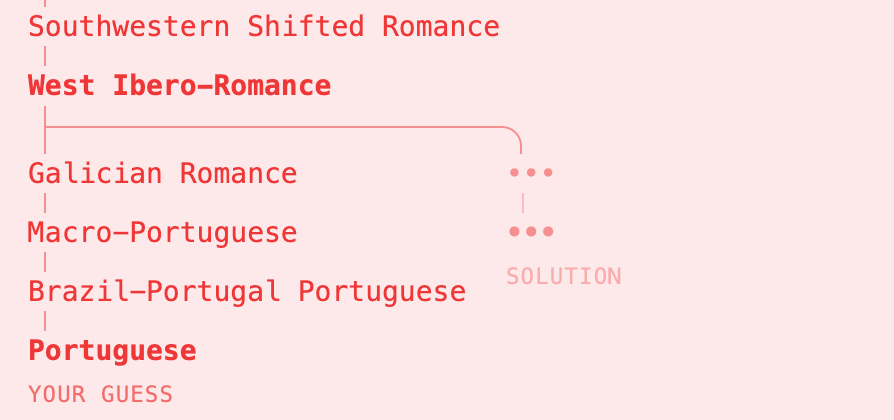
The panel you get after a wrong guess used to string family names together with arrows, and separate your guess from the solution with a dotted line. It was accurate, but it read like a list.
Now it's drawn with connecting lines, and at the exact point where your guess and the solution part ways, the tree forks off to the right. Instead of reading two columns and working out where they stopped matching, you see it. The labels for your guess and the solution sit at the bottom of their branches, where the two paths have actually ended up.
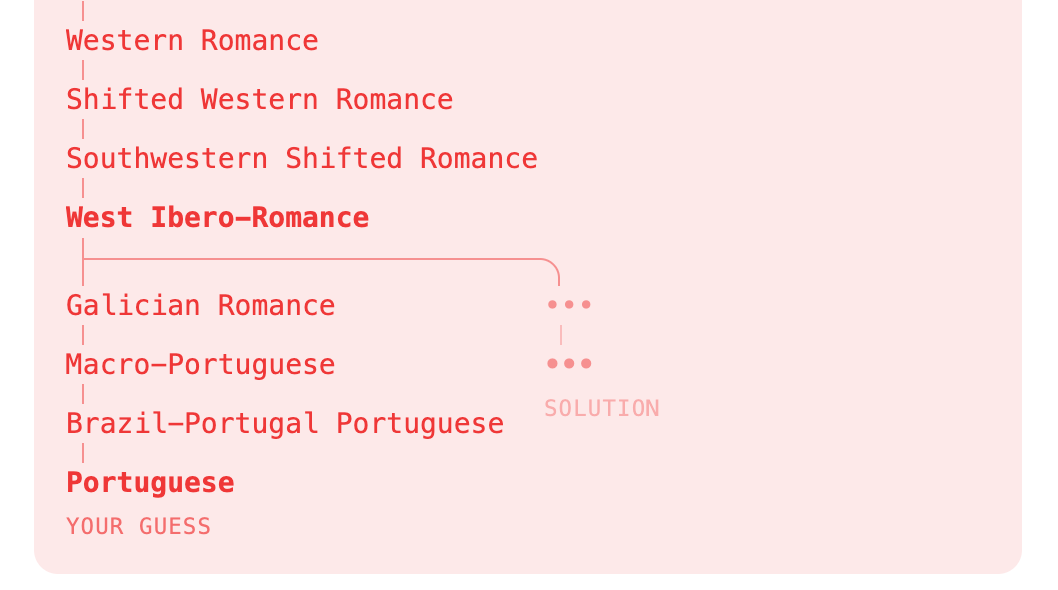
This one's for everyone — no account needed.
The language tree (subscribers)
The game only ever shows you the sliver of the family tree that connects your guess to the solution. There's a lot more of it. The new 🌳 in the header opens all of it.
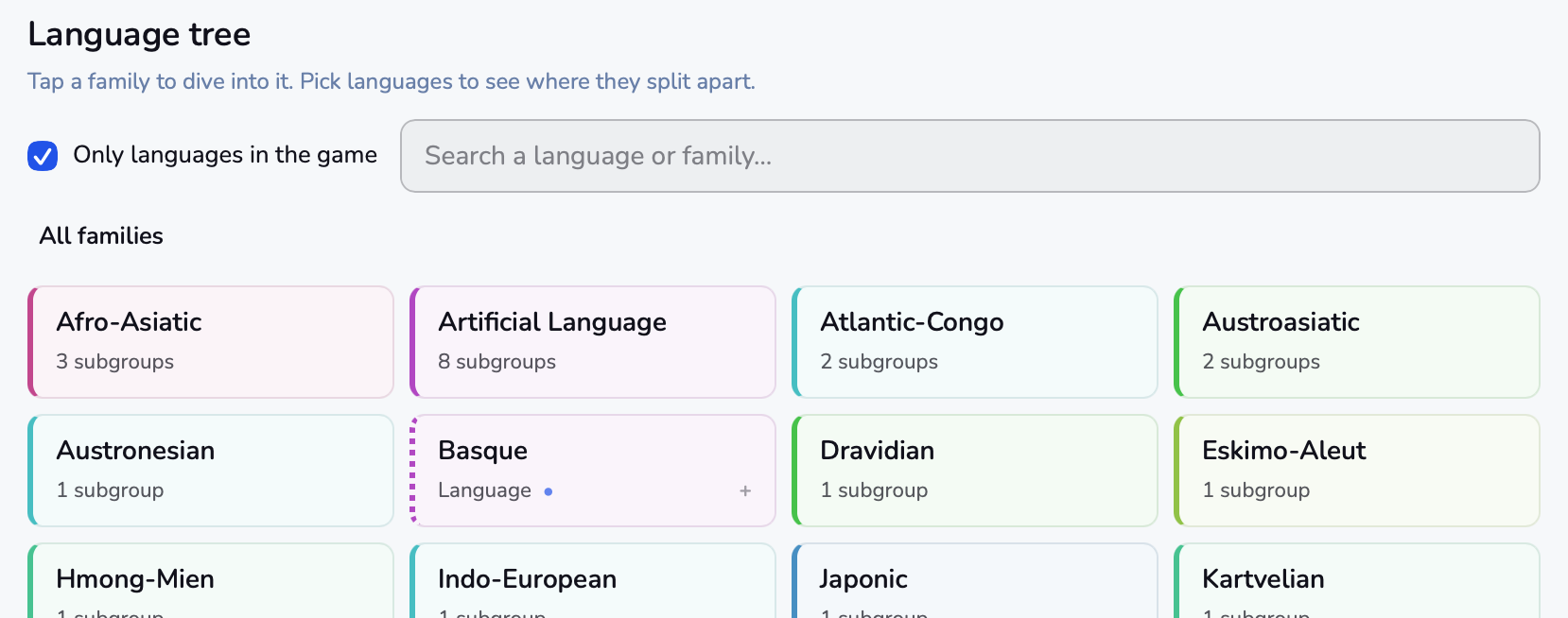
It starts at the top-level families and works like drilling into folders: tap a family, it opens into its subgroups, and a breadcrumb trail keeps track of where you are. Each family gets its own colour, so you keep a sense of which corner of the world you're wandering through.
By default the tree is filtered to the languages that can actually turn up in a puzzle, which keeps things navigable. Switch the filter off and you get the full Glottolog dataset — over 11,000 families, subgroups and languages, down to branches with a single language left in them.
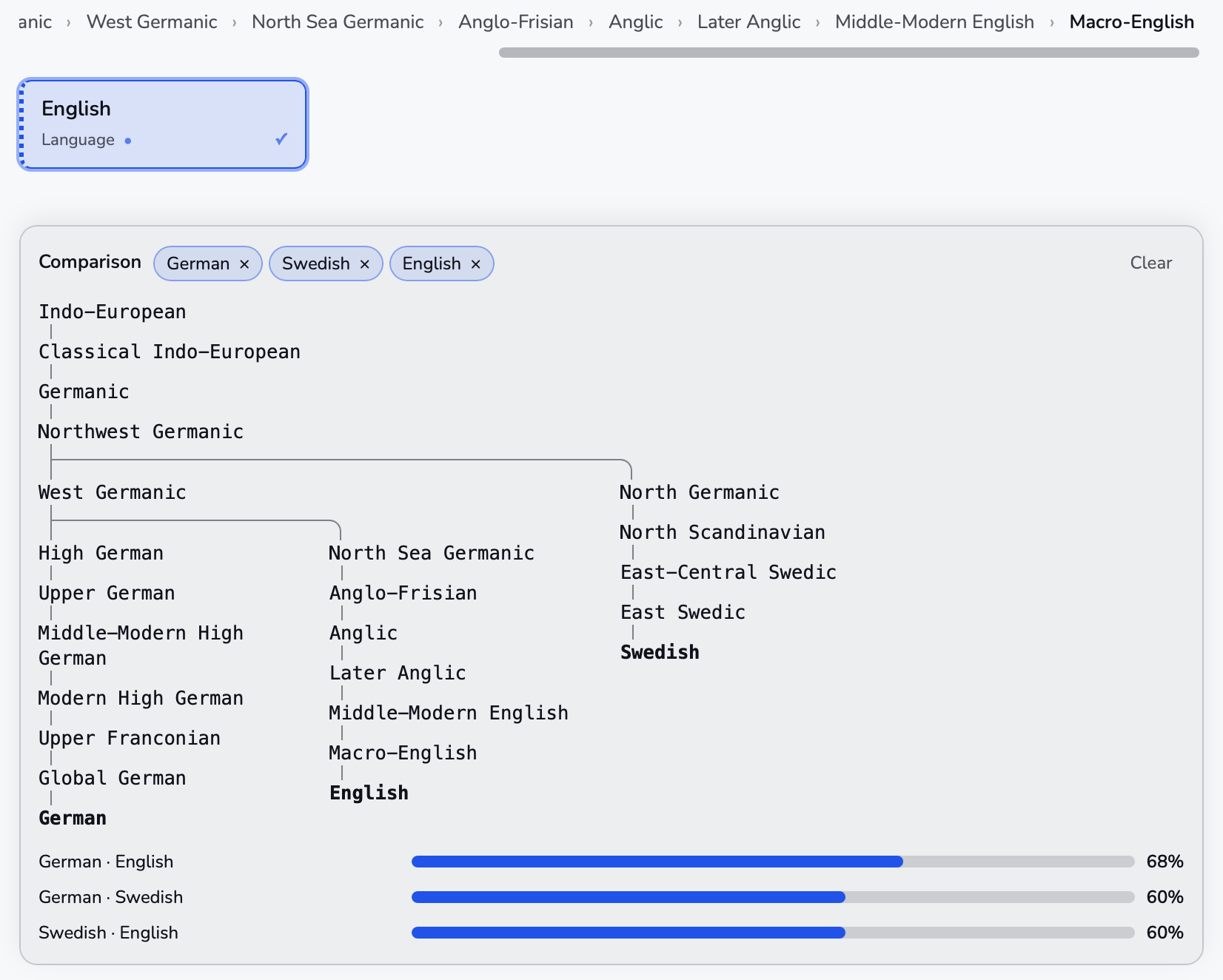
You can also pick two or three languages anywhere in the tree and get a merged tree showing exactly where they diverge, along with the similarity score, the same number the game itself uses to rate your guesses.
Interested in trying out supporter features?